The new trend in PCD tool manufacturing - five-axis laser, integrating processes with other equipment.
Development of the tool industry
The superhard tools collectively referred to in the tool industry are primarily made from materials such as PCD (Polycrystalline Diamond),CBN(CubicBoronNitride),single-crystal diamond, and natural
diamond. These materials share the common characteristics of high hardness and difficulty in processing, but their advantage lies in the extended tool life. Therefore, in their early days as tool materials, they could only be used to manufacture relatively simple cutting tools. With technological advancements, the materials and manufacturing processes for tools have expanded significantly, and the tool manufacturing processes have undergone major transformations. These changes have become more pronounced in recent years, creating a clear demarcation. To better understand the development of superhard tool manufacturing processes, we can broadly categorize them into three stages.
Based on wavelength, lasers are classified into infrared, green, ultraviolet, and other types. Similarly, according to pulse width, lasers are further divided into nanosecond, picosecond, femtosecond, and other categories. Currently, lasers are widely used and highly sophisticated in applications such as cutting, welding, marking, and additive manufacturing.
With precise control over lasers, they are poised to shape the future of technology, much like new energy sources and biological DNA. Lasers offer immense potential for improving human living environments and have a broad scope for application.
In the field of diamond tool laser processing, the core technologies are still largely in the hands of a few foreign companies. However, domestic players are gradually making breakthroughs, and several companies have successfully marketed their five-axis laser equipment, each with its unique strengths, fostering competition, mutual learning, and shared progress.
Ganzhou Pushide's five-axis laser equipment has a rich history, stemming from Shenzhen Libo Tools' adoption of laser technology for PCD tool processing in 2013. Based on practical production experience, Pushide officially launched its laser equipment to the market in January 2021. Throughout the development process, Pushide encountered numerous challenges and technical bottlenecks. Tested equipment parts and tools still occupy various corners and warehouses, serving as testament to the company's commitment. Pushide's unique research and development advantage lies in the integration of its laboratory with tool users, ensuring that every improvement stems from perfectly addressing the processing needs of tool customers. Over eight years, Pushide dedicated most of its efforts to refining software algorithms and testing processing parameters, to the extent that the design of the equipment's sheet metal exterior was only addressed at a later stage, drawing some criticism.
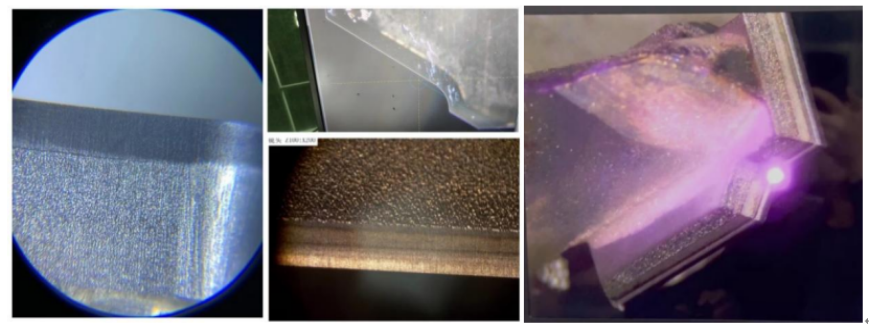
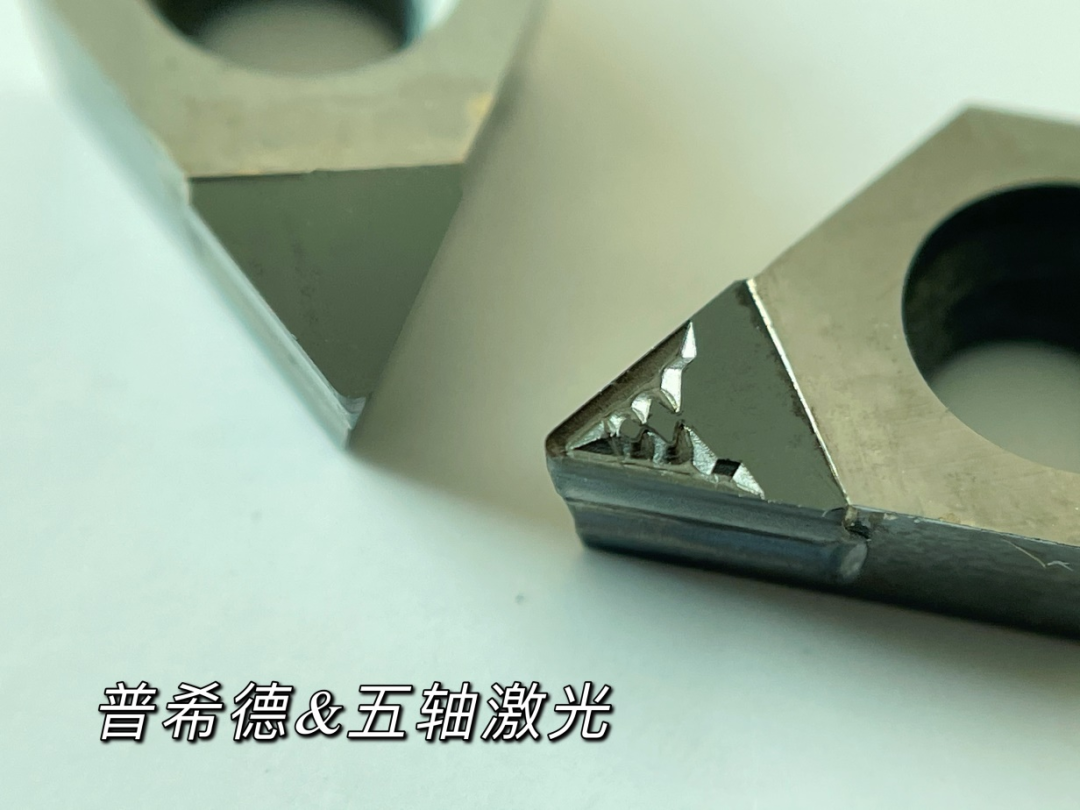
Pushide's five-axis laser offers significant advantages in PCD tool processing: high efficiency, low energy consumption, ease of operation, and diverse processing functions. It can independently handle both rough and fine processing of PCD tools and seamlessly integrate with other tool manufacturing equipment. Additionally, it features chip breaker groove engraving and outside diameter step cutting capabilities, providing comprehensive processing coverage for various diamond materials. These attributes position Pushide's five-axis laser as a highly advantageous technology for future PCD tool processing.
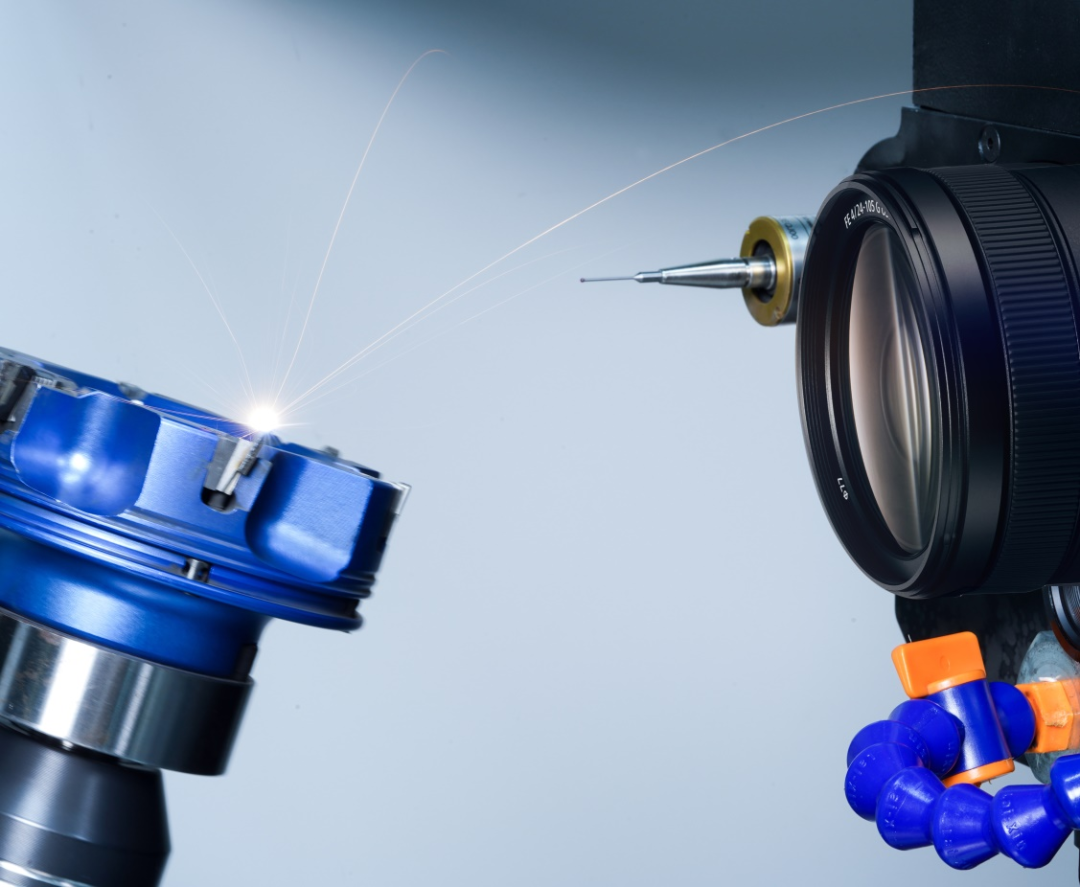
The manufacturing process of PCD (Polycrystalline Diamond) tools places high demands on equipment, often requiring collaboration among various machines to craft a superior tool. Each piece of equipment has its unique strengths, and there's no question of one completely replacing another. Instead, as technology evolves, a hierarchy emerges, with certain machines taking the lead and others supporting, depending on the specific application of the tool.
Currently, Germany's Mapal company stands as the benchmark in PCD tool manufacturing for the automotive industry. For the foreseeable future, wire cutting will remain a core production method for Mapal, closely tied to the intricacies of automotive tool craftsmanship. While Mapal does employ five-axis laser equipment and keeps pace with technological advancements, it does not intend to abandon wire cutting entirely.
On the other hand, 3C electronics tools, a product of the Chinese market, have seen rapid innovation and iteration in their manufacturing processes, led by domestic tool enterprises. It's unrealistic for these companies to continually replace all production equipment and processes or solely rely on importing new technology. Instead, the integration of novel laser processing techniques with other machinery presents a more viable solution. Here, the combination of DMG and Pushide stands out as an exemplary partnership.
For instance, in the case of single-crystal diamond tools, traditional grinding methods can be time-consuming and limited in terms of contour shaping. However, these challenges can be elegantly addressed with the assistance of five-axis laser technology. Similarly, before the final grinding stage of traditional blade manufacturing, laser roughing can be employed to remove excess material, followed by chip breaker groove processing to enhance efficiency and quality.
In the production of reamers, neither laser nor wire cutting can solely handle the job. Yet, the integration of laser equipment with grinding machines can significantly reduce manufacturing time by over 50%. For comprehensive PCD tool fabrication, laser technology can be utilized for slotting and shaping, complemented by precision finishing on imported EDM grinding machines, dramatically boosting productivity.
Within the woodworking industry, where PCD tools are heavily utilized, the adoption of specialized five-axis laser equipment can transform the existing production landscape, reducing reliance on spark erosion machines and wire cutting while minimizing investments in auxiliary equipment, measurement tools, and personnel. This shift also enables automated mass production. Meanwhile, traditional machinery can complement the five-axis laser by handling the processing of large-diameter saw blades, heavy-duty combination tools, and closely spaced teeth, where laser technology may have limitations. As such, a reevaluation and redesign of production line processes becomes essential.
Indeed, the coming decade and beyond, starting from 2020, marks a pivotal period for the diamond tool industry, where the advancement of five-axis laser processing technology is widely recognized as a key trend. It is imperative for industry players to keep a close eye on PCD laser processing technologies and, based on their unique product development directions, make strategic adjustments to their processes. By optimally leveraging existing equipment and seamlessly integrating them with laser processing, companies can significantly enhance their competitiveness.
The recent geopolitical events, including the Russia-Ukraine conflict, sanctions, chip restrictions, and disruptions in air transportation, serve as stark reminders of the importance of self-reliance and reducing reliance on external factors. The call for "Made in China" to become stronger and less vulnerable to external influences is not just a slogan but a necessity for ensuring a robust and prosperous future for our nation.
Within the diamond tool industry, this means investing in research and development, fostering innovation, and nurturing a culture of continuous improvement. By doing so, Chinese tool manufacturers can not only meet the demands of the domestic market but also compete on the global stage, contributing to the overall strength and resilience of the national economy.
Moreover, collaboration among industry players, government agencies, and research institutions is crucial for accelerating technological advancements and overcoming common challenges. By sharing knowledge, resources, and best practices, the entire industry can move forward together, driving the adoption of cutting-edge technologies
like five-axis laser processing and solidifying China's position as a
leader in the diamond tool sector.